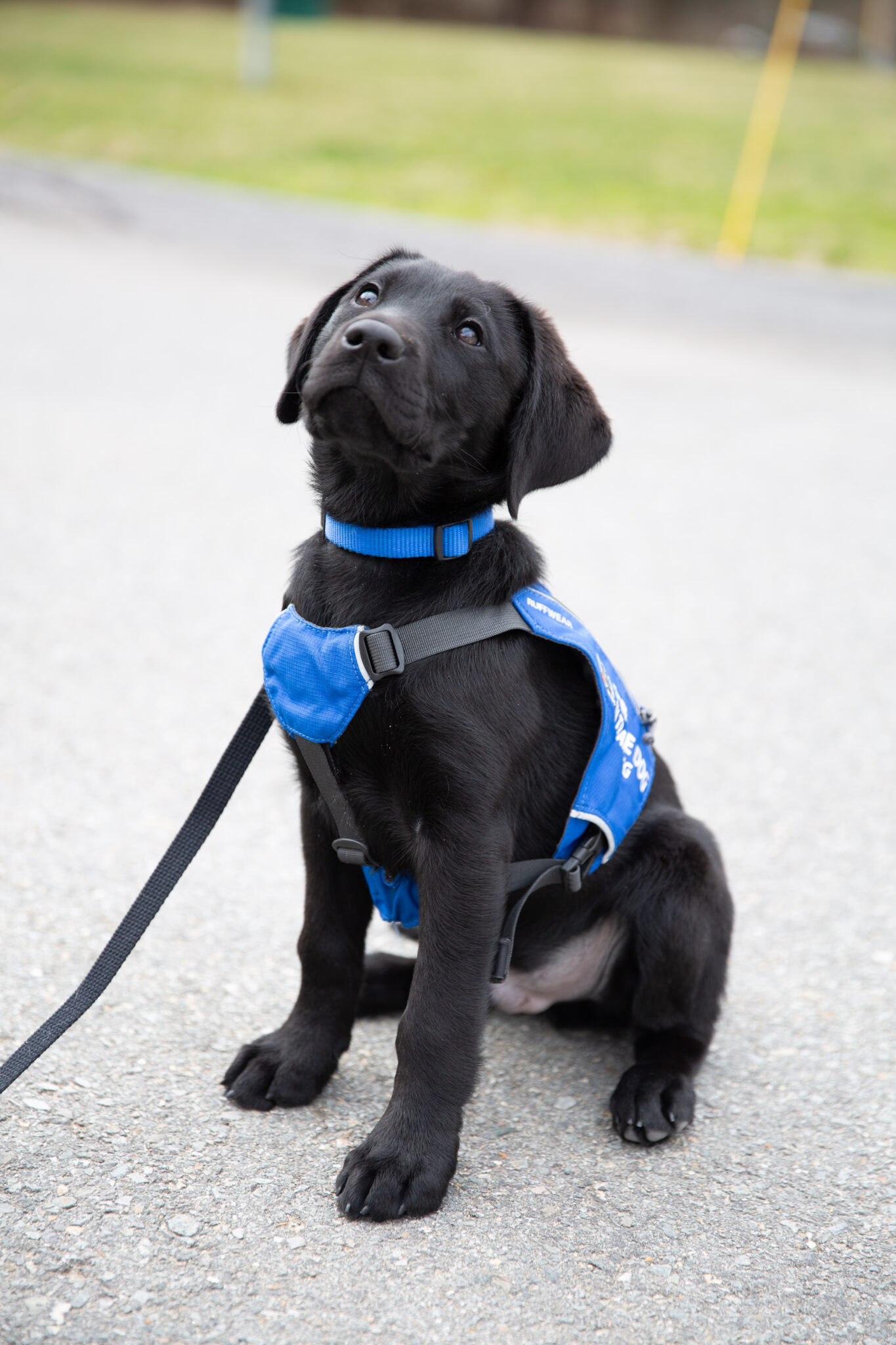
We’re sometimes asked about the difference between a Service Dog, an Assistance Dog for the Hospital and a pet therapy dog. While on the surface they may appear similar, there are four key differences.
#1: TRAINING. All NEADS dogs have Service Dog training, which means they are trained to perform specific tasks for an individual with a disability (working “one to one”). Through the matching process, we sometimes determine that a dog would be suitable for partnership with a teacher, counselor, hospital staff, minister, or someone in a courthouse setting (working “one to many”). These are our Assistance Dogs. Marcus, for example, is an Assistance Dog.
#2: PUBLIC ACCESS. Even though Assistance Dogs go through the same rigorous training and demonstrate the same “Service Dog behavior” as our Service Dogs and Hearing Dogs, they do not perform tasks directly for someone who is disabled. Therefore, they are not covered by federal laws protecting the use of service animals and do not have the right of public access, including entry into restaurants, shops, and places where dogs are typically not allowed to go. Instead, Assistance Dogs are typically invited into the hospital as a partner to his professional counterpart.
#3: TASK TRAINED. Hospitals can be noisy places, often filled with tension, and the presence of a dog can be a comfort for patients and staff alike. Pet therapy dogs provide emotional support through their presence, so you may see pet owners bringing these dogs to visit people in hospitals. NEADS Hospital Assistance Dogs, on the other hand, are not pets, but are trained in specific tasks that their handlers can incorporate into their patient interactions and daily routines. The extensive training the dogs receive also ensures that they are always under the control of the handlers and that each task and command is consistently and reliably performed.
#4: TRAINED TO WORK IN MANY ENVIRONMENTS. NEADS Assistance Dogs are trained to work calmly and steadfastly in many situations, which makes them well suited for the often highly stressful, emotional hospital environment. They will walk on a leash without pulling or straining, won’t not bark unless asked to speak, and are able to ignore distractions. They are quiet and unobtrusive unless performing specific task work.
HOW NEADS HOSPITAL ASSISTANCE DOGS HELP. Hospital staff can use the commands the dog knows to connect with patients and divert their attention from pain or an uncomfortable situation. For example, the Assistance Dog is trained to make eye contact with the command “Say Hello,” which can be used to bring someone who is emotionally distraught back into the moment. The task “Visit”, where the dog rests its head on the patient’s leg, can be used to help calm and relax someone in advance of surgery. Even a demonstration of what the dog can do (retrieve dropped items, tug open a door, push an elevator button) can be a welcome distraction. Many hospitals find that the presence of the Assistance Dog helps with staff morale, as well.
NEADS provides the Assistance Dog handler with highly personalized, hands-on training to help them successfully use the tasks most appropriate for their specific situation. The more the handler works with its Assistance Dog, the more ways they discover how to best use the training and task work in their daily interactions with patients and their families.
If you have more questions about Service Dogs, please visit our FAQ page, or submit your question here.