Rules for a Reason

Jun 14, 2023

When you attend your intensive client training period at NEADS, the trainers spend a lot of time going over what the dogs currently understand as rules, what they have been expected to do (or not to do) throughout their puppyhood and finally how you are expected to continue their training. Assuming responsibility for a specially trained Service Dog that has taken over a year of focused training, attention, medical care and monetary investment can be intimidating for some people. But the value associated with such responsibility is immeasurable.

As trainers, we are invested in you and your dog as a team. We want you and your dog to be successful, happy, and healthy. We care deeply for what we do, and in a sense become a sort of parental figure for the two of you. If you are a parent yourself, you are familiar with the fervent feelings of worry, nurture, structure and pride. We are too.

Because we care, we set guidelines that we expect you to follow in order to keep your team in optimal working condition. Here are a couple of key “NEADS rules” and why they are important to follow:

Continue to use all of the equipment your team was certified with

NEADS dogs are trained and certified while wearing the Gentle Leader. This head halter is designed to reduce pulling and give you more control over the dog’s head/nose (the trouble making end). We have tried other products in the past but with much less success. If you or your dog is having difficulty using the Gentle Leader, please contact your trainer for advice.

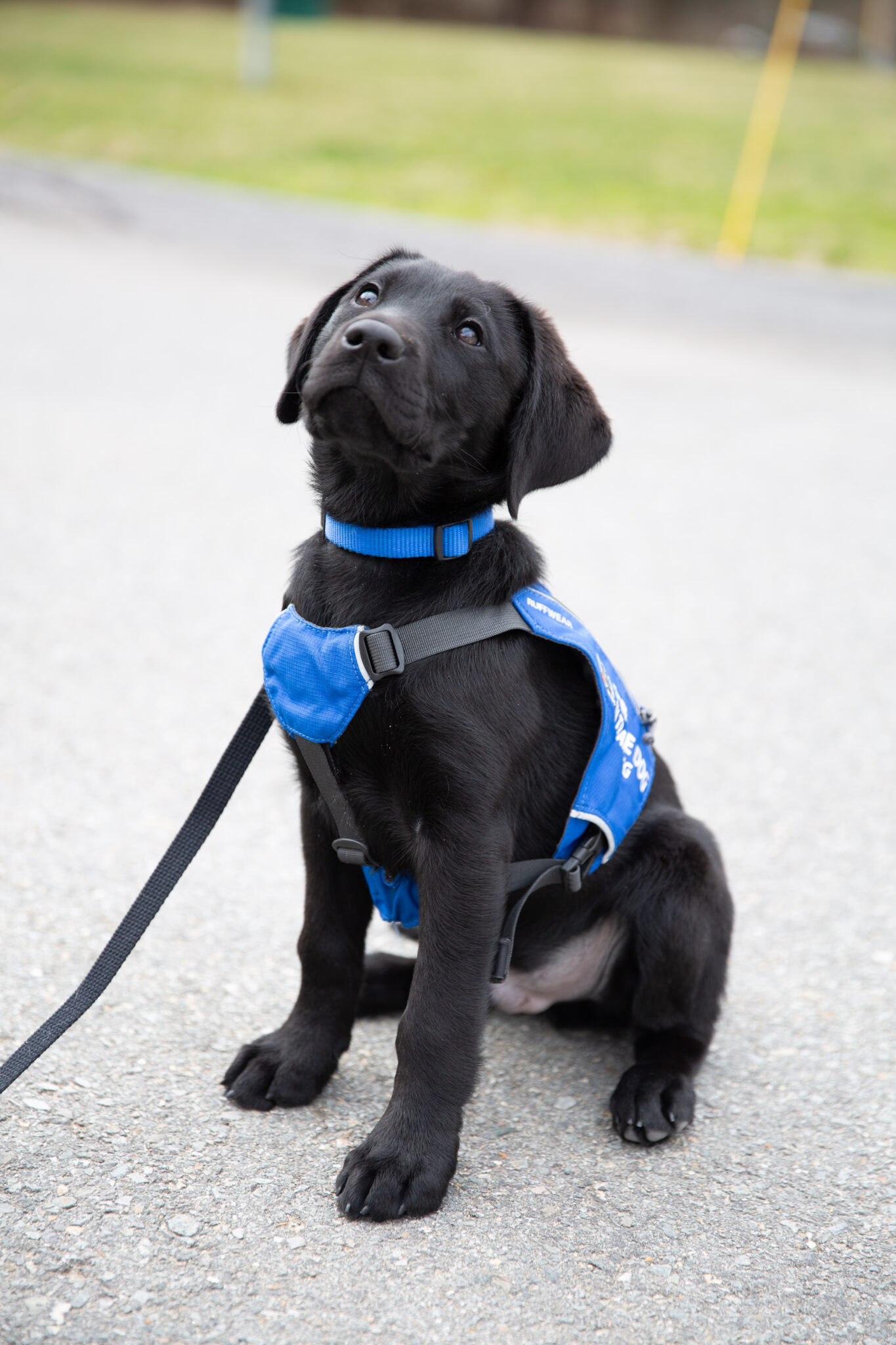
NEADS also supplies each client team with a cape/vest and/or backpack. These serve to identify your dog as a working dog in public and also to provide some small carrying capacity. According to Assistance Dogs International, all dogs that are certified with an accredited organization (NEADS is proudly accredited by ADI) must be visibly identified with the training school’s name.

A working leash is shorter than a pet dog leash. NEADS dogs should typically work on leashes that are between 2-4 feet long, although sometimes leashes up to 6 feet long are approved for certain clients/situations that are able to manage/adjust leash length easily. Leashes that are too long can allow your dog to forge ahead, become distracted or lose focus. The leash supplied at training is a great, adjustable tool that has been selected for visibility and utility. If you would like to change the type or length of leash that you use with your dog, please contact your trainer.
All equipment should be kept clean and in good working condition. Remember that you are an ambassador for NEADS as well as all Service Dog users. If you need replacement equipment, please contact NEADS.
Never allow your dog off lead outside of an enclosed area
We know, we know…everyone’s doing it. You will constantly see dogs running free and enjoying themselves out in the wide open world. They truly are enjoying themselves…which is part of the problem. The more freedom dogs get, the more they learn that there are other great things in the world besides you. When they are off lead, they wander, sniff, explore and RUN. Which is all fine (and actually necessary for your dog’s mental well-being) for your dog to do in a completely safe and enclosed area. But when you take away the safety net of an intact fence, a tether, or an electronic fence, you run the risk of never getting your dog back.
First and foremost, there is the obvious danger associated with allowing a dog to run free. Traffic. NEADS Service and Assistance Dogs have been desensitized to traffic from day one of their training so that they can walk calmly next to a running bus or cross a busy street with their partner. Unfortunately, this also means that they have no sense of danger of oncoming vehicles and they must rely on us to keep them safe. There are also other potential dangers that free roaming dogs may come across – porcupines, skunks, unfriendly dogs or people, toxic substances, or dangerous surfaces are just a handful of examples.

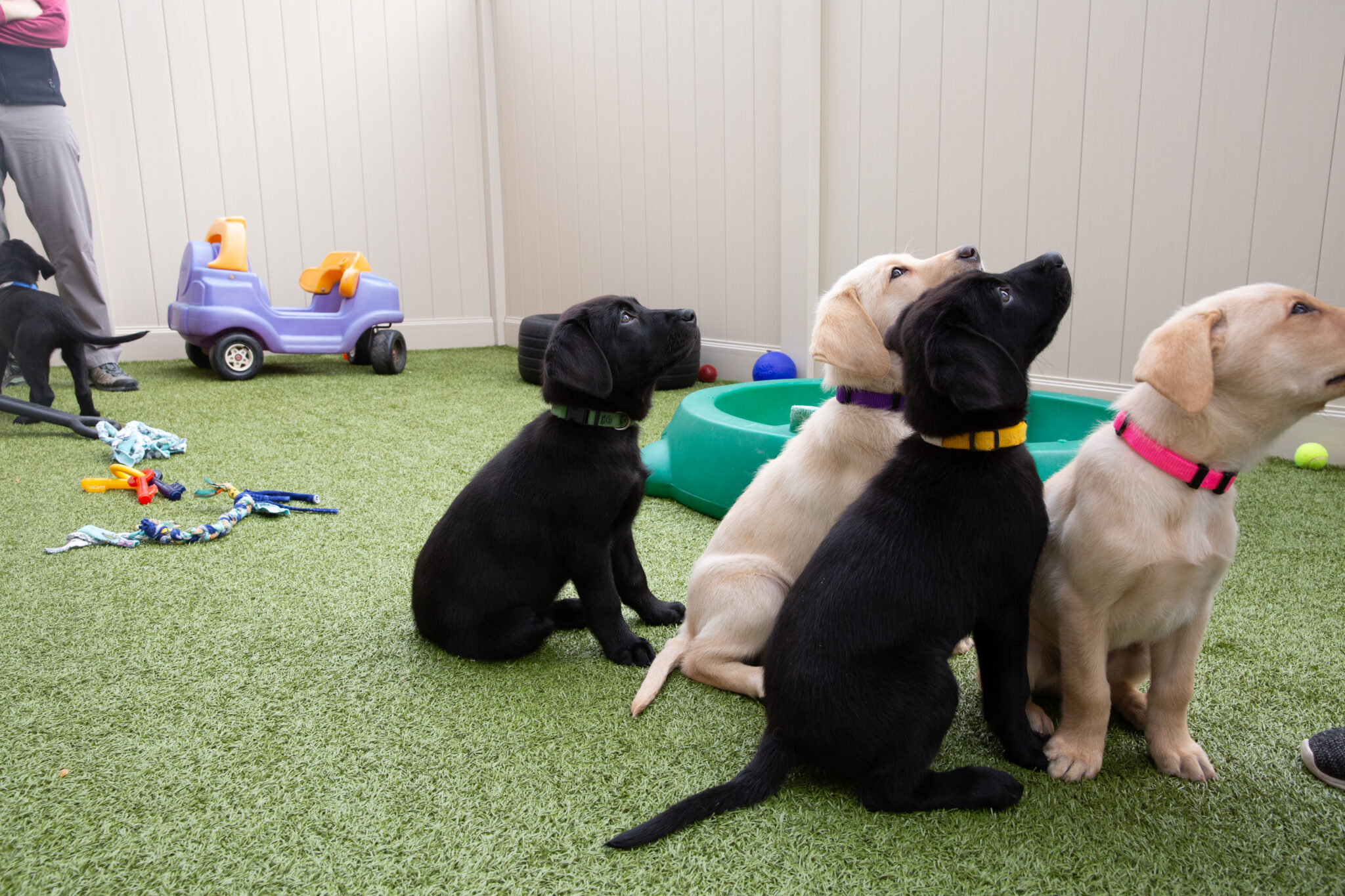
The other reason to keep your dog safely on lead is one that many people overlook. No recall (“come” command) is EVER 100% reliable. Although we spend a lot of time training our dogs to “come” on cue, there is no guarantee that a dog will always make the choice we want them to make when presented with a tough decision. For example, if you take your dog to the beach and set them loose, they are bound to find all kinds of interesting things to sniff, eat and roll in. Would it be worth it to your dog to drop a dead crab, ignore running seagulls and resist the urge to dig in the sand as soon as you say the word “come”? It’s hard to say. Without a leash to reinforce your command, there is a very good chance that your dog will begin to understand that your words are suggestions rather than commands.

Behaviorally, it is less of an issue for pet dogs to ignore their owners. They have less at stake. If a Service Dog learns that commands don’t actually need to be followed, they may begin to become unruly in public, disobedient around the home, or even refuse to perform their tasks when their clients need them to.  Practicing the “come” command is vitally important in case of emergency. But please do so in an approved manner. And let your dog have their free time while upholding their safety first.
We trust in you to keep our dogs safe and well mannered. Go make us proud!

Veterinary Clinic & Early Learning Center Major Donors

NEADS would like to thank all who are supporting our Foundations for the Future fundraising initiative. Your support has helped us build a Veterinary Clinic and Early Learning Center. 

The Amelia Peabody Charitable Fund
American Legion Auxiliary #122 Methuen
The Amica Foundation
The Barker Foundation
David & Ellen Berube
Thomas & Lucille Brennan
Bob & Liz Burke
Constance M. Burtoff
Larry & Nanine Costa
Delta Sand and Gravel Inc.
Kleta Sue Dudley
Andrew Feit
Sue Feit
The Fletcher Foundation
The George I. Alden Trust
Fred Gordon
Harry Grey & Cam McCormick
Donna & Thomas Grisso
Constance Harsh
The Hoche-Scofield Foundation
Karen & Don Irving
Theodore Jewell & Nancy O’Brien
The Kenrose Kitchen Table Foundation
Carolyn Kiess
Carol Krauss
Lily Lee
Tricia Lee
Leominster AMVETS Post 38

Cindy & Bob Leopfsky
Anthony Matteo & Denise Ranucci
Ritamarie McConnell
Laura McTaggarg & Tom Nolan
Robyn Meyn
The Laura J. Niles Foundation
Richard & Kathleen Norman
Michael Pagano
The Patterson Foundation
JD Power Family
Jim & Doreen Rao
RAWZ Natural Pet Food
Dean Regier & Donna Akiyoshi
Robert & Eleanor Demple Family Foundation
The Ruth H. & Warren A. Ellsworth Foundation
Christoper Ryan & Lily Baddour
John & Susan Schneeweis
Nancy & David Serbun
Jack & Betsy Sinnigen
The Stoddard Charitable Trust
Richard Storck & Aletha Langham
Patricia & Robert Sumner
Diana Thomas
The Thurman Family
Tower of Hope
Gordon & Diana Tracz
The Windbrook Fund
Window Designs Etc. by Marie Mouradian